 Walkably
Paris: more than 500 stretches of pavement are narrower than 1.40 m
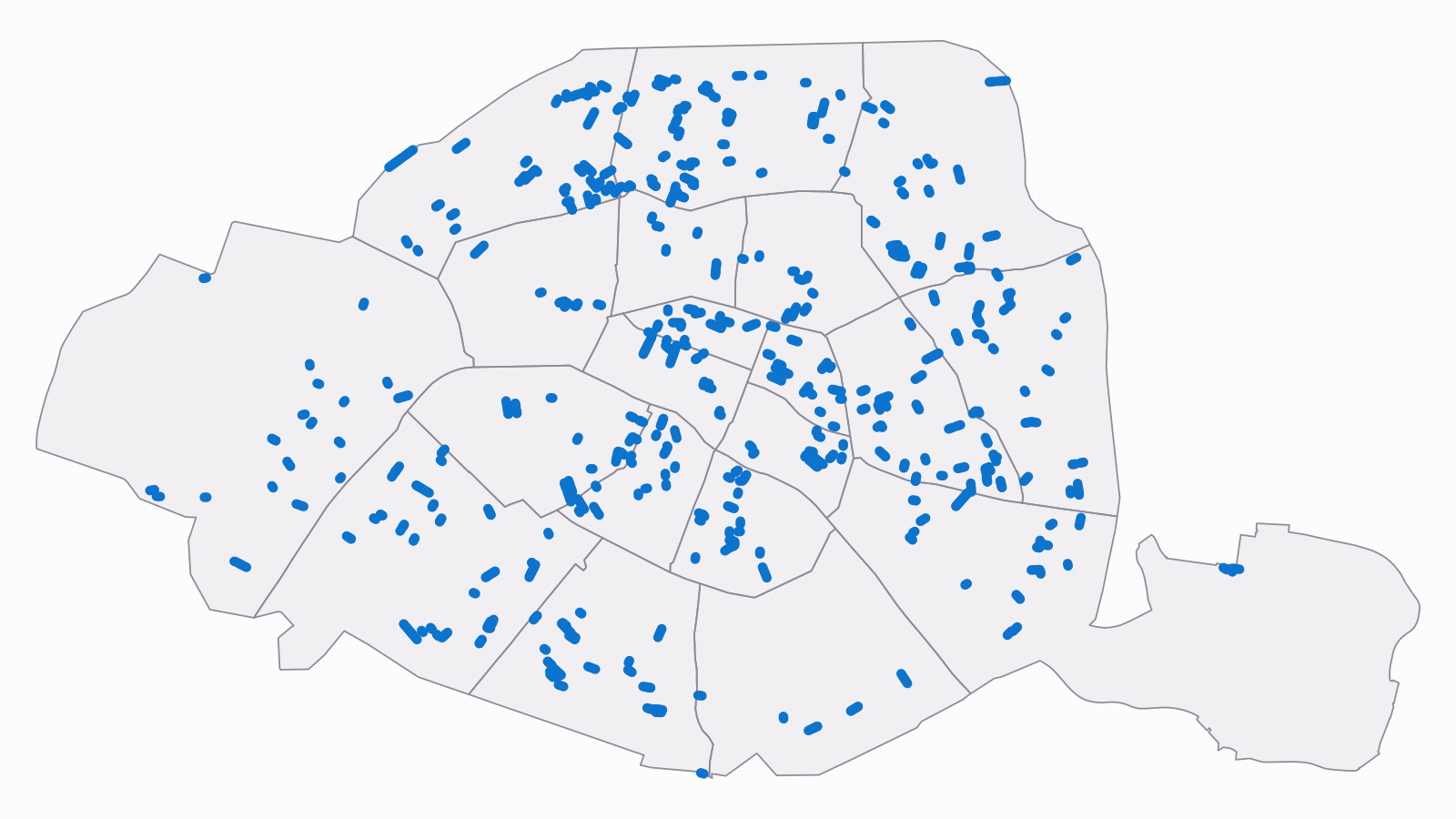
On 335 Paris streets, the pavement stays narrower than 1.40 m for at least 30 m: 561 stretches in all, about 33 km of street side. 1.40 m is the width French accessibility rules ask for on a walkway when a street is built or redone.
Published
Every arrondissement has some
The 18th has the most, with 67 stretches, then the 17th (55), the 15th (49), the 11th (43) and the 19th (42). On 133 streets, there is a narrow stretch on both sides of the street. About one stretch in four is on a small lane, a courtyard street or a dead end.
The streets at the top of the list
We ranked the list by how many people live within 150 m, because a narrow pavement affects more people where more people live. Rue Sauffroy in the 17th comes first. Then come Passage Cardinet (17th), Passage Pénel (18th), Rue Falguière (15th) and Rue Claude Tillier (12th), each with a narrow stretch on both sides.
What the rule says
The French rules for accessible streets ask for a walkway 1.40 m wide, free of street furniture and other obstacles. Where there is no wall or obstacle on either side, 1.20 m is allowed. The rules apply when a street is built, redone or resurfaced. They do not require the city to widen every pavement that exists today.
How we measured
We cut each pavement on the City of Paris street plan into pieces about 10 m long and measured each piece from the kerb to the building line. A stretch counts when three pieces in a row, about 30 m of street, are under 1.40 m. Corners and crossings are left out, and so are main roads, quays and the Boulevard Périphérique.
Benches, posts, bins and café terraces are not taken away from the width, so the free path on these stretches is, if anything, narrower. We checked 20 stretches drawn at random from the list on aerial photos and laser height data from the national mapping agency: 18 were under 1.40 m. Of the other two, one was right on the line and one was more a paved square than a pavement.
Journalists, city teams and local associations can ask for the full list, street by street, through our press page.
Every Paris neighbourhood's score for daily needs on foot is on the Paris map.
Data and sources
City of Paris street plan, pavement outlines of 10 October 2026; street names and road types from the map data. How the score works.
Sources: